#2: Blade Runner 2049 (2017)
Disclaimers:
- Spoilers ahead… if you care.
- Also, I am NOT one of those “lonely and horny” 4chan posters.
- TL;DR i write about the effects of 1st-gen eldest daughter syndrome
Depression and Loneliness Explored Through the Lens of Blade Runner 2049
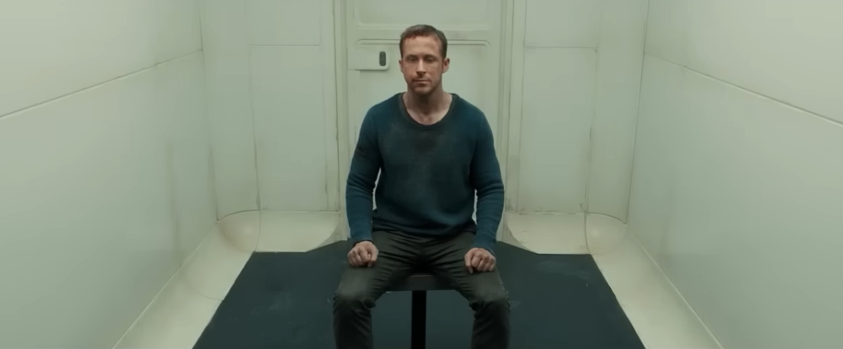  |
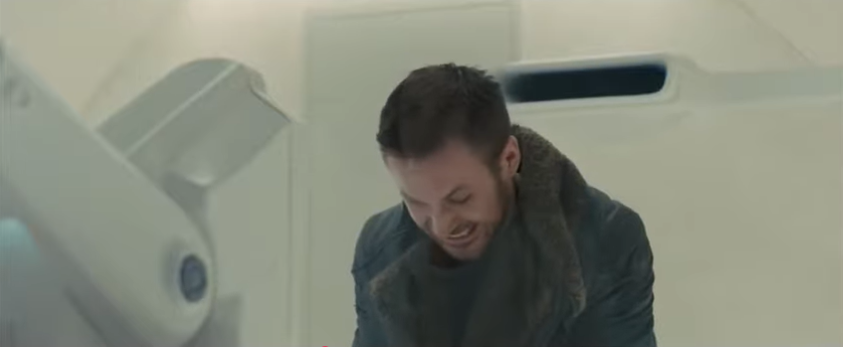
Do you dream about being interlinked? Blade Runner 2049 explores a LOT of things: humanity, loneliness, existentialism, urban decay... all that good cyberpunk-y shit. But I think out of every one of this film's strengths — and there are many — the Post-Traumatic Baseline Test surpasses them all. The first five minutes stuck with me the most. So, the point of the baseline test is to check for emotional deviance in replicants. This one, opposed to the Voight-Kampff test, is super in-your-face: it’s provocative and aggressive, and it assures the Nexus-9 replicants of the fact that they are considered nothing more than subhuman. Skinjobs, if you will. The Voight-Kampff was insidious. It was just as carefully thought out, but it used subtlety to expose. Both tests are administered in a hostile manner… yet 2049’s own takes it to the next level. The unseen test moderator speaks through an uninviting-looking machine, and the testing room is literally a cell. Despite all this, “Constant K” is rewarded for limited emotional expression, because it is evidence that the retirements he has been doing haven’t had any moral impact on him. Conversely, in the second baseline test within 2049, there are a few curious differences. In the beginning, the questions are the same. However, as the assessment goes on, the emotional prodding grows more intense. Consequently, K’s responses are repeatedly delivered with hesitation, so he is then prompted to echo different selected lines from Pale Fire in a like manner. In the end, his psychological responses are deemed unsatisfactory; he has failed the test — badly enough to be retired on the spot. Rightfully so, though. At this point, he has recently undergone a rollercoaster of emotions and is processing disappointment beyond belief. To top it all off, the test moderator delivers that famous line, with snide: “You’re not even close to baseline.” |
 |
Where is my baseline? I related to K... before learning how to feel. Referring back to the opening scene, K looked like a beaten dog when walking back into work, averting every possible gaze. For a long time, that was me – either in the halls of my high school or my own parents’ home. I would feel repulsive, unlovable, worthless -- like some kind of anathema. On occasion, these periods lasted for upwards of three (what felt like prolonged) days. I would feel so down. My body would feel so heavy and my head would ache like crazy. This was the norm throughout my high school days. It was rough. Why? I had expectations to live up to: a lot of it could be traced back to setting a “good example.” Be well behaved, keep the grades high, remain faithful to Christ, etc. Let me emphasize that these expectations in themselves are not unattainable! The burden was heavy, and hard things are worth doing. However, I am a human being, not a human doing. When I sought a confidante, I faced rejection from my parents and grandparents. I was discouraged from expressing my pain in times of weakness. Sometimes this rejection was delivered in lecture form; sometimes, it was an indirect ‘go away’. I, in turn, internalized this and tied my worth as a daughter to the output I produced through my achievements. Long story short, growing up, emotional expression was not rewarded in my household. School was hard, too. I was not a particularly awkward kid but coming back after the mask mandate made me fearful of people all over again. Finding a like mind was difficult. I eventually did find my clique nearer to graduation, yet I made the mistake of spending most of my time around a different group of people that did not value me. This caused me to operate on edge 24/7: even speaking freely felt risky. At sixteen, I couldn’t recall the last time I genuinely laughed from my belly, or smiled until my cheeks hurt. During this period, I yearned for a true friend. Admittedly, I had a few – even a best friend, but the feeling wasn't mutual: I was not their own number one person. Whatever. I am grateful that I could trust them but a feeling of inadequacy still ate away at me from the inside. This was my own "baseline.” I sat with the loneliness. Most of my days were quiet... although not quite peaceful. |
|
Dr. Ana Stelline: It feels authentic. If you have authentic memories you have... real human responses. Wouldn't you agree? |
Let us go even farther back in time. “I have memories, but they're not real,” K tells Lieutenant Joshi. “They're just implants.” The closest things I had to friends back in elementary school were the YouTubers on my mum's phone that addressed me with a, “Hey, guys!" They did not know my name. The world I saw was the one they documented through their douchebag editing. This was the substitute for quality play time with the kids next door. They were never around. My early years were extremely lonely. It sucked. In all this, I aim not to besmirch my family -- especially not my parents. A lot of things were out of their control. Hell, they were still students and Green Card holders: they had a lot on their plate. Not to mention, they were first-time parents amidst all this. The first kid is always the lab rat, anyway: if not me, then someone had to serve as the test run! Nevertheless, my parents, as well as I, really do wish things could have been different back then. As for my grandparents, they hail from a different world. The same planet, yes, but our cultural differences shaped our interactions. (They have their own issues. Mental health isn’t discussed as openly as it is here in the West. I’ve realized it best to just let them be.) It’s another uncomfortable feeling sometimes… balancing two starkly different cultures as a first-generation American. Whatever. It is what it is. |
|
Rick Deckard: You got a name? |
A real boy needs a real name… Joe. Present day, present time, I am in a different situation, thankfully: I am walking in the freedom and revelling in the selfishness that university life brings: physical distance separates me from my family, so my choices affect primarily me, really. The consequences of my actions remain my business and aren’t a matter of positive or negative influence on my junior siblings; also, I am actively being encouraged to explore my rather niche interests – and I’m not doing it alone all the time. Most importantly, I am surrounded by people I can confidently call friends, and I am experiencing healthy, predictable, and safe love from a wonderful person. I feel at ease around them. They love me for me. Life is great right now. Ultimately, I might be grabbing at straws here. Or just projecting. Or suffering from "literally me" syndrome. I can not deny that 2049 triggered a string of emotions I never otherwise knew existed. |